Replacing a Ford Focus engine is a significant undertaking, but for experienced DIY mechanics with the right tools and space, it’s entirely achievable. Whether you’re addressing an ongoing Ford Focus engine malfunction, persistent warning lights, or planning a complete engine change, careful preparation and methodical work make all the difference.
At Trents, we’ve seen engine replacements evolve over decades, giving us a clear view of the practical challenges drivers and technicians face. That experience has helped shape this guide, focusing on straightforward, real-world advice rather than theory. The aim is simply to give you confidence and clarity to tackle the job methodically from start to finish.
Key Takeaways:
- Choosing a like-for-like engine is usually the simplest option and helps avoid unexpected compatibility issues.
- Taking photos and carefully labelling parts as you go makes putting everything back together far less stressful.
- Inspecting supporting systems—cooling, intake, mounts, and wiring—is just as important as fitting the replacement engine itself.
- Double-checking connections and fluid levels before the first start helps catch common post-swap issues such as leaks or no-start conditions.
- Patience and a methodical approach are the biggest factors in achieving a reliable, professional-standard result.
Before You Start
An engine swap requires considerable time and patience, so plan for several days rather than a quick weekend job, especially if this is your first ford focus engine replacement. Setting realistic expectations early helps keep the project manageable and avoids unnecessary pressure.
Whenever possible, choose a like-for-like engine. Matching engine codes and specifications reduces the risk of compatibility issues with wiring, ECU programming, and emissions components. While broader swap options can be tempting, differences between variants often add complexity such as custom mounts or electronic changes.
If the previous engine failed catastrophically or the turbo broke down, plan to inspect the intake system later in the process. Debris trapped in the intercooler or pipework can quickly damage a replacement engine if it isn’t cleared.
Identifying and Preparing the Replacement Engine
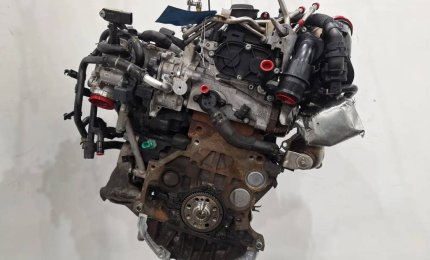
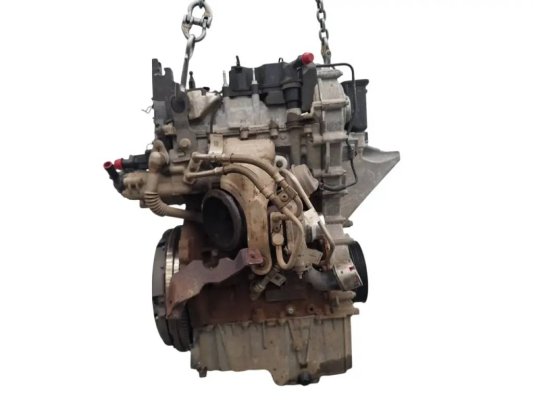
Replacement engines are commonly sold as long blocks. This typically means the core engine assembly is included, but accessories such as the alternator, starter motor, belt drive components, manifolds, and sometimes sensors are not.
Before beginning your engine replacement, confirm exactly what is included, what must be transferred from the old unit, and what Ford Focus spare parts you need to source.
It is also important to verify compatibility with your vehicle’s electronics, including engine control units for Ford Focus, as mismatched ECUs can lead to running issues, warning lights, or immobiliser problems after installation.
Trents provides support in this process as every engine sold is checked for fitment and quality to meet our standards, and our team will help confirm things like engine codes and part compatibility before purchase.
Before installation, take time to:
- Inspect the engine for visible cracks, damaged mounting ears, or broken connectors.
- Confirm mounting points and sensor locations match your original engine.
- Rotate the engine by hand using a socket on the crank pulley to ensure it turns freely and smoothly.
A careful inspection at this stage can prevent costly delays once the engine is in the bay.
Preparing the Vehicle for Engine Removal
For a smooth removal process, follow these steps:
- Begin by disconnecting the battery and draining the engine oil and coolant. Safety is paramount, and isolating electrical systems reduces the risk of short circuits.
- Remove the bonnet for better access and visibility. Many DIYers also remove the front clip or core support to create working space rather than struggling with tight clearances around the radiator support panel.
- Take clear photos of hose routing, wiring paths, and component positions before disconnecting anything.
- Label electrical connectors, vacuum hoses, and fluid lines.
- Keeping fasteners stored with their related components will save hours during reassembly.
Disconnecting Systems and Components
Before lifting the engine, every supporting system must be carefully separated. Working methodically at this stage prevents damage to wiring, hoses, and connectors that may otherwise go unnoticed until reassembly. Make sure to take your time with this step: you’ll reduce the risk of complications later.
Electrical and Wiring
Disconnect wiring looms and sensors methodically. Avoid pulling on wires; always release connectors using their locking tabs. Ground straps are critical—loose or forgotten grounds are a common cause of no-start issues after reassembly and may trigger the engine light or unexpected electrical faults. As you remove wiring, note its original routing to avoid pinching or chafing wires during reinstallation.
Fuel, Intake, and Exhaust
Disconnect fuel lines carefully and cap them where possible to prevent contamination. Remove the intake piping, the intake manifold where required, and associated components.
Separate exhaust connections and heat shields, applying penetrating fluid if bolts are seized. If the previous engine suffered internal damage or turbo failure, inspect the intake and intercooler pipework for debris. This step is essential to prevent repeat damage.
Cooling System
Remove the radiator, cooling fans, and hoses as needed for clearance. With the system open, inspect hoses and plastic fittings for cracks or soft spots. This is an ideal opportunity to flush the cooling system. Sediment or contamination left behind can shorten the life of your replacement engine.
Separating the Engine from the Drivetrain
Before separating the engine and transmission, support the transmission securely using a jack and suitable support.
Remove the driveshafts or axles, preparing for stubborn lower ball joints. Many DIYers report this as one of the more challenging stages due to corrosion and limited access.
Allow extra time for this part of the job. Inspect the engine and transmission mounts once removed. Worn or collapsed mounts are a common cause of Ford Focus engine noise, particularly under load or at idle.
Removing the Engine
With all systems disconnected and the drivetrain separated, you are ready to remove the engine from the vehicle. This stage requires patience, as clearances in the Ford Focus engine bay are often tight.
Before lifting, double-check that nothing remains attached. Small ground straps, coolant hoses, or hidden connectors are easily missed and can cause unnecessary resistance.
Follow this step-by-step approach:
Step 1: Confirm all connections are free
Inspect the engine bay from above and below. Check near the firewall, subframe, and gearbox side for any remaining hoses, wiring, or brackets.
Step 2: Attach lifting equipment securely
Connect an engine crane or hoist to the designated lifting points using rated chains or brackets. Ensure bolts are secure and the engine is balanced before applying load.
Step 3: Apply light upward tension
Take up slack in the chain until slight tension is present. If the engine does not shift slightly, recheck the mount bolts and hidden connections.
Step 4: Remove engine mount bolts fully
With light tension applied, remove the remaining mount bolts. Keep the transmission supported if it remains in the vehicle.
Step 5: Lift slowly and steadily
Raise the engine gradually, watching for movement in wiring or hoses. Stop immediately if resistance is felt and investigate rather than forcing it.
Step 6: Adjust angle as needed
Tilt the engine slightly if required to clear the subframe or chassis rails. A load leveller allows controlled angle adjustment.
Step 7: Clear tight areas carefully
Guide the engine past the firewall, brake lines, and frame rails with care. Move slowly to avoid damaging surrounding components.
Step 8: Transfer to a secure stand
Once clear, move the engine to a stable stand or pallet and lower it carefully before removing the lifting equipment.
Forcing the engine past obstructions can bend brackets, damage wiring, or crack plastic fittings. A controlled and deliberate approach will protect both the vehicle and the replacement unit that will soon take its place.
Removing the engine is a major milestone in the process. Once complete, you’ll have full access to inspect the engine bay, mounts, and surrounding components before you begin with installation.
“While the Engine Is Out” Checks Worth Doing
With the engine removed, your access improves dramatically. This is the ideal time to replace seals that are difficult to reach with the engine installed, such as the rear main seal and transmission input seal.
Inspect or replace engine and transmission mounts. Check radiator hoses, heater hoses, vacuum lines, and rubber connectors. Age-related wear is common, and replacing them now avoids future labour duplication.
Inspect belts, tensioners, and pulleys, and replace worn components. If the previous engine failed catastrophically, thoroughly clean or inspect the intake manifold and intercooler for debris. Overlooking this step is a frequent cause of repeat engine damage following an engine malfunction on Ford Focus models.
Preparing the Replacement Engine for Installation
Transfer required components from the old engine to the replacement unit, including brackets, sensors, manifolds, and ancillary parts. Replace gaskets and O-rings during this process to prevent oil or coolant leaks. Avoid disturbing sensors that require alignment tools unless necessary, as incorrect installation can trigger warning lights or cause poor running. Perform a final inspection before lowering the engine into place. Confirm all mounting points are clean and threads are in good condition.
Installing the Replacement Engine
Lower the engine carefully into the bay and align it with the mounts and the drivetrain. Take your time to guide it into position without forcing components.
Secure the engine mounts before fully tightening transmission connections. Reconnect intake, exhaust, cooling, fuel, and electrical systems methodically.
Route wiring and hoses away from heat sources and moving parts. Careful routing helps prevent future electrical issues that might otherwise trigger a Ford Focus check engine warning after completion.
Clutch and Transmission Considerations
- If the clutch was recently replaced and remains in good condition, it can often be reused. However, many DIYers choose to install a new clutch while the engine is already out.
- Proper clutch alignment is critical during installation; an alignment tool ensures smooth engagement of the transmission input shaft.
- Be aware that certain fasteners, such as flywheel bolts and axle nuts, are often considered one-time-use items. Replacing them as recommended helps maintain reliability and safety.
Fluids, Bleeding, and First Start
Refill engine oil, coolant, and any other required fluids to manufacturer specifications. Bleed the cooling system carefully to remove trapped air.
If the clutch hydraulics were disturbed, bleed them as well. Very importantly, before first start:
- Check all connections
- Verify all ground straps are secure
- Inspect for visible leaks.
Monitor the engine closely during initial idle. Listen for unusual engine noise and observe gauges or warning lights. An early oil change after initial running is often recommended to remove any assembly debris.
Common Issues After Reassembly
A few issues can arise after reassembly is complete. Here’s what to look out for:
- No-start or weak-start conditions. These are frequently caused by loose or missing ground connections. Double-check these before assuming more complex faults.
- Vacuum or intake leaks can result in rough running or hesitation. Coolant or oil leaks typically trace back to disturbed seals or hoses that were not fully seated.
- Electrical issues often arise from pinched or misrouted wiring.
Address problems methodically and avoid guesswork. A properly completed Ford Focus engine swap should run smoothly without persistent warning indicators.
Final Checks and Test Drive
Perform a thorough visual inspection before driving. Ensure all tools are removed from the engine bay and that fluid levels are correct.
Begin with a short, gentle test drive. Avoid heavy acceleration initially. After the engine has heat-cycled, recheck fluid levels and inspect for leaks.
Address small issues early before returning to regular driving. Early intervention can prevent minor concerns from escalating into larger problems.
When to Stop and Reassess
If components do not align naturally or require force to install, stop and reassess. Forcing parts into position can damage mounts, threads, or sensors, and some procedures require specialised tools, including timing alignment tools on certain engine variants.
Attempting the above steps without proper equipment may create larger problems than the original fault. Taking extra time to reassess is always preferable to damaging parts or creating new issues. With a careful, measured approach, you can ensure better long-term reliability.
FAQs
How long does it take to replace a Ford Focus engine?
Replacing a Ford Focus engine typically takes between 12 and 25 hours of labour, depending on experience, tools, and workshop setup. First-time DIYers should allow several days to complete the job carefully. Factors such as seized bolts, drivetrain removal, and transferring components can extend the timeline.
Can I replace a Ford Focus engine myself?
Yes, a Ford Focus engine change can be completed by an experienced DIY mechanic with the right tools, space, and mechanical knowledge. It’s not a beginner-level task and requires lifting equipment, axle stands, and a solid understanding of electrical and fuel systems. If you’re uncomfortable separating the drivetrain or diagnosing potential malfunction issues, professional assistance may be the safer option.
What causes a no-start after an engine replacement?
A no-start condition after a Ford Focus engine replacement is usually caused by:
- Loose or missing ground straps
- Unplugged sensors or wiring connectors
- Immobiliser or ECU communication issues
- Fuel system not properly primed
- Incorrectly installed crank or cam sensors
In many cases, the issue is electrical rather than mechanical. If your check engine light or engine malfunction warning appears after installation, carefully recheck all wiring and ground connections before assuming a more serious fault.
Do I need to reprogram the ECU after replacing a Ford Focus engine?
In most like-for-like Ford Focus engine swaps, reprogramming is not required if you reuse the original engine control unit and supporting electronics. However, a different engine variant may require ECU coding or immobiliser matching. Always confirm compatibility to avoid warning lights or running issues after installation.